How Faith-Based Investing Could and Should Become More Impactful
ABSTRACT - While faith-based investing has had a long history, it has largely been one-sided: focused on what NOT to invest in rather than what should and could be proactively promoted and built. In this essay – prepared for the exclusive use of the first Faith in the Common Good colloquy hosted in Paris on April 16-17 – two financiers of deep faith reflect upon how faith-based investing could and should become more impactful. They hope it will elevate a broader understanding of the non-concessionary opportunity set for faith-based asset owners who want their capital to co-create an earthly Kingdom that would please God, our Father in Heaven.
Introduction
If the multi-trillion dollar ESG movement has shown us anything, it’s that a growing number of investors want their capital to do well and do good. But double-bottom line investing is not new: in fact, it was first and foremost a faith-driven enterprise. Indeed, wanting to maximize the good one’s financial assets generate is arguably as old as capital itself. Instructive parables and maxims about ethical investing can be found in the Vedas, Talmud, Old and New Testaments, and Koran. This paper explores how ancient and more modern faith-based investment traditions have evolved and presents a series of recommendations about how faith-based investing could and should become more impactful.
A Brief History of Judaic, Christian and Islamic Faith-Based Investing
For millennia many observant Jews followed direct Talmudic advice on how their investments could promote more purposeful, mindful living, with particular focus on preserving the natural environment. The Parable of the Talents as recounted in Matthew 25:14-20 has long guided Christians in their pursuit of ideal investment stewardship and f inancial outcomes. Beginning in at least 314 AD, usury – that is to say, the charging of interest on loans – was prohibited by multiple Christian and Muslim sects, including the Catholic Church. Sharia-compliant Islamic finance still broadly precludes the charging of interest today. Buddhist and Hindi investment practices similarly extol mindfulness and the clarity and calm such mindfulness brings.
Following the Enlightenment, specific ethical investment goals began to emerge from Christian religious communities. In 1688, a group of Quakers in Pennsylvania lodged their first public protest against the global slave trade. Over the next century, as multiple groups formally joined the Friends’ abolitionist movement, a dedicated anti-slavery divestment campaign gained traction. During the 18th and 19th centuries, the aversion of investment into the slave trade began to expand to other “sin industries,” most especially alcohol, gambling, tobacco, and firearms. Divestment as an investment strategy to effect change gained notable intensity in the 1960s and 1970s as protests against apartheid in South Africa globalized. The first so-called “socially-responsible” mutual fund – the Pax World Balanced Fund - was launched in 1971. Other intentional mutual funds, including the Dreyfus Third Century Fund, soon followed.
While the next big innovation in intentional capital allocation is ESG and sustainable investing, it is worth pausing to reflect on the values-based strategy that has defined faith-based and socially-responsible investing (SRI) from the dawn of capital allocation through 2000 AD: namely, divestment.
In short, the vast bulk of faith-based and SRI investing strategies from their inception through the present age focused almost solely on what people should NOT invest in: it seldom concerned itself with what men and women of faith should be invested in and, by inference, what should be promoted. Slavery and its cousin apartheid; intoxicants and their mistresses, gambling and the sex trade; life-denigrating activities, like weaponry and pharmaceutical firms that facilitate abortion – all these enterprises, as well as the charging of interest on interest, were to be avoided by faithful capital. Portfolio sanctity was defined by what was not funded – not by what was achieved. If returns were lower, so be it. Ethical consistency was the goal. Maximizing returns was not a primary concern.
An important question thus emerges: why were values prioritized over valuations? The answer is not complicated. Faith-based investing was focused on investments that were consistent with religious values. Returns were secondary. Faith-based and socially responsible investing in their origins clearly understood that withholding their capital may not end the unwanted activities they targeted – but ending those activities was beyond their purview. Instead, their goal was moral purity. The exclusion of certain activities and industries from one’s portfolio provided irrefutable ethical alignment on important areas like slavery, alcohol, tobacco, gambling, pornography and weaponry. Divestment also sent a message of rejection if not outright condemnation.
Humility in faith-based investing is justified. Mindful investors can divest themselves to ethically-aligned portfolios – but mindful investors will not be able to divest their way to an ethically-aligned world. Divestment’s role in creating a more ethically-aligned world is operationally circumscribed. For those who want their investments to proactively create and support change, something other than divestment is needed.
The inference of this discussion for a more intentional faith-based investment taxonomy is clear. If someone, some fund or some firm claims their investment or divestment strategy produces non-financial change, they should not simply be taken at their word: rather, they should be required to substantiate it. Investors of faith as well as of conscious increasingly seek an actionable, intuitive, reliable investment taxonomy which clearly differentiates strategies that demonstrably promote changed corporate behaviors from other strategies which merely optimize risk-adjusted returns. This includes desirable environmental, social or economic progress.
The Emergence of ESG and Sustainable Investing
Faith traditions fueled the birth of socially-responsible investing through the imposition of religious and moral screens to the process of capital allocation. ESG and sustainable investing are similarly intentional investment initiatives, but they largely grew out of two more recent secular concerns: climate change and diversity, equity and inclusion (DEI) goals. Many of these are now explicitly enumerated in the UN’s Sustainable Development Goals. The UN-SDGs’ norms and concerns have not remained fixed, however: they have evolved over time, first from eight millennial goals, to ten and now seventeen objectives. Climate and DEI concerns were not preoccupations for the UN or many other institutions before 2000. Until late in the last century, in fact, most humans were concerned about how to protect themselves and their loved ones from the elements, or what they were going to eat that day. Excess carbon emissions, the possible temperature of the earth 50 years from now, and gender and minority representation in a public corporation’s workforce were not salient. In fact, they did not dominate investor concerns until fairly recently.
These points deserve emphasis. Through most of human history up to and through the 19th century, in part due to high infant mortality rates, global life expectancy was little more than 30 years: today it has more than doubled, to 73 years. As recently as 1980, half of all human beings lived below the poverty line, then defined as $1.91 per day (now, $3 a day): today that figure is closer to one out of twelve. Literacy rates for much of the world were as low as 4% during the Middle Ages. They rose to 21% in 1900, meaning only one out of every five could read. Today 85% of the earth’s inhabitants can read and write. Most tellingly, global per capita income has risen dramatically in the modern era, from around $1,000 in 1800 and $2,500 in 1980, to nearly $15,000 today. A six-fold increase in global living standards during the past five decades is a stunning, and vastly under-appreciated achievement.
All these advancements are laudable. They would not have been possible without relatively free markets and competitive, global capital markets. This said, they have not been costless. Growth at this torrid pace simultaneously accelerated two negative externalities: environmental degradation and wealth inequality. Both of these negative phenomena are now straining social contracts and undermining human dignity. If left unchecked, serious social ruptures are likely. As mentioned above, in 2000, the United Nations launched a highly publicized effort to address these two externalities and other human challenges more pointedly with the adoption of the Millennium Development Goals. Then, 191 nations and member states of the UN formally pledged to eradicate poverty and hunger, achieve universal primary education, promote gender equality, further reduce child mortality and ensure environmental sustainability. In 2005, then-UN Secretary General Kofi Annan invited a group of financiers to develop complementary investment principles to further support the attainment of these goals. This working group produced the UN’s Principles for Responsible Investment. The ESG movement – an acronym standing for environmental, social and governance – grew out of the propagation of these investment principles. Today, more than 5,000 signatories overseeing more than $130 trillion in investable assets have pledged to respect the UN’s PRI guidelines.
But note importantly, while not lacking ambition, the inception of the ESG investment movement was limited to one goal: risk mitigation. In short, UN-PRI signatories explicitly pledged to properly respect all material risks that may arise out of evolving environmental, social and governance factors. For many managers, these concerns were nothing new; their heightened emphasis by the UN-PRI vaulted them into a higher level of focus, however. In the years that followed, multiple attempts were made to quantify every environmental, social and governance risk systematically. ESG investing is distinct from SRI in that all companies can incorporate ESG strategies to mitigate risk; in contrast, SRI is confined to negative screening of selected offenders. New ESG ratings were developed by multiple agencies, including Sustainalytics, MSCI, S&P Global, ISS, Refinitiv, Moody’s and Bloomberg. Dozens of asset management firms developed new mutual funds and ETFs using these new ESG analytics as well as their own. For more than a year beginning in 2020, these new, ESG funds amassed $8 billion of inflows per day. By 2023, Vanguard, BlackRock, Fidelity, Allianz, Capital Group, Parnassus and others had raised trillions of dollars for their dedicated ESG fund platforms.
As with any industry, as ESG funds scaled, they did so with strong, reputable offerings as well as those that had obvious shortcomings. ESG critics have pointed to untested analytics across ESG data sets and an over-reliance on ESG factors. Correlations between ESG ratings among the various rating agencies in some instances proved so disparate no single set of data could be relied upon, leaving fund managers to make subjective determinations. For example, Tesla received very high ESG scores from some rating agencies which prioritized environmental risks, but very low scores from those which prioritized governance. Which rating should investors use?.
Today, there are more than 99,000 funds globally that claim to invest ethically, sustainably, faith-based, socially-responsibly or in some other intentional way. 14,500 of these funds use the term ESG in their prospectuses. About 1,000 of these are purely faith-based. According to Bloomberg, the combined market value of all funds that pursue faith-based, socially-responsible, ESG, sustainable, select, committed, advanced outcomes – i.e., the entire sector of intentional investing - now amounts to more than $30 trillion.
In recent years, ESG and DEI have become increasingly politicized, which has led to misinformation, confusion, questioning and reluctance of some investors, funds and corporations to continue investing with ESG metrics. This has clearly had effects which may be reversed as political winds change over time. With this backdrop, Investors who want to invest intentionally – that is, either to align their portfolio with their religious beliefs, or use their capital to somehow change an economic, social or environmental outcome – often struggle to understand if their chosen intentional investment fund is making the world better, generating acceptable returns, or merely underperforming the market without anything to show for it. Growing numbers of intentional investors logically want their capital to be aligned with their core values, something that can genuinely be achieved with screened portfolios. But many other faith-based investors want their capital to promote their core values and promote positive change proactively. They want to co-create a world that would please God and get a reasonable return in the process.
Faith-based investors often seek to divest their way to a more ethical, faith-based world, just as environmentalists and social activists usually strive to divest their way to a cleaner, fairer future. But there is another, more demonstrable and more effective way that they may INVEST that helps create the outcomes they seek without necessarily conceding investment returns – and in some cases, even exceed market returns. In more succinct terms, there is a path for capital to do good while doing well.
The rest of this paper outlines how faith-inspired impact investing targeting strong risk-adjusted returns could thrive, pleasing God and supporting His coming Kingdom.
The Emergence of Impact Investing
While SRI (using screens to avoid investments that conflict with values) and ESG investing (evaluation of environmental, social, and governance practices to manage risk) are reactive investment approaches, impact investing is differentiated by the proactive and intentional allocation of capital toward funds or companies that create tangible change. First coined in the mid-2000s, impact investing starts by identifying a specific social or environmental challenge and then structures investments intentionally to deliver stronger impact outcomes—ensuring that measurable impact performance is aligned with financial performance. As a result, impact investing can serve as an even more powerful and transformative approach than SRI or ESG investing. The very intent and business model of the enterprise is to deliver meaningful, measurable social or environmental outcomes rather than simply avoiding harm. Given its outcomes-oriented nature, impact investing has given rise to novel investment approaches across multiple impact areas, including all 17 of the aforementioned UN Sustainable Development Goals. As the growth and success of the proactively good business scales, so does the resulting impact or benefit to society. While impact investment assets stand at a fraction of those in SRI and ESG strategies, it is estimated that the global impact investing market is growing rapidly— according to reputable sources, 2024 impact investing AUM stood at $1.6 trillion, reflecting a 21% compound annual growth rate over a five-year period.
To illustrate these trends, two examples are explored: the first is based upon the actual experience and record of the Sorenson Impact Foundation, the second based upon the work of the Impact Evaluation Lab, an analytics firm that promotes transparency and best practice in all intentional investment strategies.
How the Sorenson Impact Foundation Drives Impact While Achieving Market Returns
The Sorenson Impact Foundation (SIF) was founded in 2012 when the impact investing field was still at its earliest stages, with the mission to invest in socially impactful businesses while encouraging others to do the same. The Foundation is also unique among most U.S. foundations: in 2017, President Jim Sorenson and the Foundation's Board of Directors made a monumental decision to seek mission alignment for 100% of the Foundation's endowment assets while maintaining a market-rate return target. Further, where possible, investments from the Foundation's endowment, known as mission-related investments (MRIs), were to prioritize thematic impact over ESG or SRI investments due to their solutions-oriented business models and ability to generate transformational change. By the end of 2020, the endowment portfolio was fully transitioned to impact investments, including public equity, private equity, venture capital, real estate, and fixed-income strategies in a diversified, endowment-style investment portfolio.
SIF’s financial data speaks for itself: the portfolio hasn’t had to make a trade-off on performance. In fact, SIF’s MRI portfolio has outperformed its market-rate benchmark by 0.7% annualized since the beginning of the mission-alignment process on December 31, 2017.
Each year SIF has continued to add new, high-conviction strategies to the MRI portfolio as the impact investing landscape matures. In the context of public-market volatility in 2025, our investment approach emphasized identifying uncorrelated and less-correlated strategies (such as private credit or hedge funds) capable of generating consistent returns across market cycles. This process led to two new investments for the Foundation: (i) a community solar strategy designed to deliver clean energy generation while providing bill savings and employment opportunities for low-income communities, and (ii) a credit-focused hedge fund seeking attractive risk-adjusted returns while engaging high-emitting issuers to support decarbonization efforts. Although the broader impact-investing sector has faced significant political and legislative scrutiny, SIF’s board and investment team maintain strong conviction in its long-term strength and relevance. Despite the challenging macroeconomic backdrop, increased adversity should (i) encourage impact investors to finance dynamic and all-weather investment strategies and (ii) generate resilience among impact-focused entrepreneurs, who will have to accomplish more with less capital.
To build a 100% mission-aligned investment portfolio, the Foundation intentionally kept asset allocation very similar to its previous, non-impact-driven asset allocation, an important feature that enables the Foundation to uphold its ultimate goal: to serve as a perpetual pool of philanthropic capital. Like any successful investment strategy, manager selection is key. As such, the transition to impact was executed through a manager-for-manager approach, where non-impact strategies were replaced with carefully researched and vetted thematic impact counterpart. For example, beginning in early 2018 the Foundation began to rotate proceeds from legacy, non-impact private equity positions into several highly impactful venture capital funds, including a fund that invests in solutions that uplift marginalized communities and a fund that invests in products and services to fuel the economic resilience of underserved populations in emerging markets. These investments have proven to not only outperform their nonimpact peers in returns but generate significant impact in the communities they operate in. Faith-based organizations looking to mission-align their full corpus with their values could consider narrowing in on key impact focus areas alongside an asset allocation framework that is consistent with the organization's overall financial goals. For organizations that are 'impact-curious', initiating investments in a dedicated carve-out can provide enhanced flexibility while initiating a toehold in the impact landscape.
Equally as important as tracking an investment's financial returns is tracking its impact performance. Given the Foundation’s exclusive commitment to impact investing, financial and impact outcomes are inherently interconnected—an alignment that is clearly demonstrated by our impact measurement and reporting process. Since inception, the Foundation’s MRI investments and Program Related Investments (see footnote 2) have impacted the lives of 2.25B people, avoided 308.4M metric tons of CO₂ emissions, supported the creation of 566.4K jobs, created or preserved 25.7k of affordable housing units, enabled 400MM students and jobseekers access to education or jobs, increased or improved access to health care for 32.7MM patients and catalyzed $31.7B in capital for underserved borrowers. Although the Foundation formally conducts impact measurement on an annual basis, the tools that underpin this process—such as the UN’s SDGs and the Impact Management Project’s Five Dimensions of Impact framework—are applied throughout the investment lifecycle. Their ongoing use ensures that material impact considerations remain central to investment sourcing, due diligence, decision-making, and monitoring.
An exciting future lies ahead for faith-based impact investing. The universe of market-rate, impact-oriented investment strategies has dramatically expanded over the past decade enabling professionals and entrepreneurs to align their money and work with their values making possible diversified, multi-asset portfolios generating market rate returns while solving societal challenges and uplifting disenfranchised populations at scale.
The Human Flourishing Project
The second example we wish to share about how faith-based investing could be more impactful involves a real time initiative led by two firms: Sovereign’s Capital (SC), a widely respected, faith-based investment firm that has been operating since 2012; and an impact investing analytics firm, the Impact Evaluation Lab (IEL).
Sovereign’s Capital mission is “to love God and our neighbor through investing.” For more than a decade, SC has pursued this mission by investing in lower middle market companies ($10-100mm in revenue); early-stage technology companies (Seed and Series A); publicly traded companies; US domestic real estate; and separate venture and PE managers, primaries, secondaries, co-investments and GP stakes in a fund-of-funds structure. SC combines rigorous financial due diligence with demanding, faith-focused discernment and high-touch portfolio engagement, prioritizing faith-based stewardship and long-term value creation. Central to SC’s philosophy is the conviction that capital can beget influence — that meaningful investors shape not only the financial trajectory of a business, but its culture, leadership, and the people it touches as well.
The Impact Evaluation Lab is a data-analytics and rating firm dedicated to promoting consistency, transparency and best practice throughout the impact investment ecosystem. It’s Impact Authenticity Score (IAS) – developed in conjunction with the Sorenson Impact Institute at the University of Utah – is a widely-respected, marketleading tool that provides investors with assurance that a specific impact investment fund is authentic to its stated mission, likely to achieve its stated impact goals and generating its stated, target financial return. In this respect, IAS scores are not dissimilar to credit ratings. They operate as a first round of due-diligence for investors who want their capital to effect positive social, environmental or economic change while also generating a market-based return.
Following a detailed review of two of their public and private asset strategies, IEL and Sovereign’s Capital jointly agreed to develop a new faith-based impact measurement and management framework which SC could deploy across a range of future fund strategies and asset classes. The resulting Human Flourishing Project (HFP) required an updated Theory of Change, a clearly defined impact thesis, and the identification of specific financial and non-financial metrics relating to human flourishing. SC’s Theory of Change holds that transformation happens in and through the marketplace — that faith-driven business leaders, properly formed and actively engaged in their work as a calling, promote genuine flourishing for employees, customers, communities, and the broader world. HFP gives this conviction measurable form, organizing SC’s impact work across three pathways: 1) promoting flourishing within portfolio companies; 2) positively impacting society through their products and services; and 3) catalyzing the broader faith-driven investment movement. The primary subject of the detailed metrics that follow is the first of these three pathways: the portfolio company workplace itself. IEL has independently certified that, if properly deployed, SC’s new HFP-compliant funds could generate attractive market returns twinned with – and indeed, partly driven by – the promotion of several dozen specific human flourishing performance metrics.
All HFP-themed funds will be anchored to the Harvard/ Baylor/ Gallup framework for human flourishing (HBG-HF) as its paradigmatic framework. Founded in 2016 and led by Harvard’s Institute for Quantitative Social Sciences, HBG-HF defines human flourishing as living in “a state in which all aspects of a person’s life are good” (VanderWeele, 2017), a definition that aligns closely with SC’s own mission to love God and neighbor through business. The framework recognizes that material factors alone are insufficient for human wellbeing; family, friendship, virtue, community, human dignity, religious freedom, forgiveness, and purpose must also all be cultivated for individuals to fully flourish. Drawing on research across more than 200,000 individuals in 22 countries, HBG-HF identified six separate domains essential to human flourishing:
Financial and Material Stability
Close Social Relationships
Mental and Physical Health
Character and Virtue
Meaning and Purpose
Happiness and Life Satisfaction
Unsurprisingly, religion and spirituality emerged as a significant independent determinant of flourishing across all cultures, providing robust academic grounding for SC’s conviction that faith-integrated leadership is foundational, rather than incidental, to genuine human flourishing. Through direct corporate engagement, targeted capital investment, and active CEO leadership development, SC deploys these tools in service of Pathway 1: Flourishing Within the Holding — i.e., the deliberate cultivation of human flourishing inside each portfolio company.
SC and IEL have further developed a set of measurable input and output metrics for each HBG-HF domain as applied to the workplace including: Financial and Material Stability (living wages, profit-sharing, benevolence funds, financial literacy); Mental, Physical, and Spiritual Health (chaplaincy, family-friendly benefits, sabbath policies, whole-person health ratings); Meaning and Purpose (authentic mission activation, community service programs, volunteer hours); Character and Virtue (leadership development, prayer and Bible study groups, tenure and character assessments); Close Social Relationships (mentorship programs, faith-aligned employee resource groups, portfolio-wide community-building); and Happiness and Life Satisfaction (team member satisfaction surveys, life evaluation scores, “Best Places to Work” designations). A seventh SC-specific dimension — Leadership Spiritual Alignment — compliments all others, tracking the faith integration and spiritual development of the CEO and senior team. SC’s broader impact thesis further encompasses the redemptive quality of portfolio companies’ products and services (Pathway 2) and SC’s role in catalyzing the wider faith-driven investment movement (Pathway 3). Investors in SC’s future HFP-themed fund offerings will receive detailed impact reports documenting progress attained in all these areas. HFP-themed fund investors will know exactly what non-financial impacts their capital promoted in addition to what their capital has earned. Impact investing is distinct from ESG, sustainable, socially-responsible and faith-based investing precisely because it generates tangible social, environmental and/or economic progress combined with financial returns. With HFP metrics, SC is equipped to offer a range of faith-based fund offerings across multiple asset classes that promote human f lourishing in a tangible, measurable way. In so doing, SC will be able to strengthen and expand their mission to love God and our neighbors through investing.
Conclusion
Like finance more broadly, faith-based investing stands at an important crossroad. Across public and private equity and debt markets, money markets, bank lending, crypto, infrastructure and commodity markets, global investable capital is now nearing one quadrillion dollars – that is to say, $1,000 trillion. Of this astonishing sum, a record amount – perhaps as much as $8 trillion – is faith-based or faith-aligned. In short, abundance has displaced scarcity. Abundance creates extraordinary, new opportunities. As scripture tells us, abundance also engenders new responsibilities. It is our deep conviction that a growing portion of the financial assets that investors oversee can and should be directed to verified and verifiable impact investments. There are a growing number of opportunities to put capital to work that simultaneously serve the underserved; protect our air, land and waters; promote human flourishing; resolve housing shortages; amplify human dignity; include the excluded – and generate a range of f inancial returns, both concessionary and non-concessionary. We imagine a day not far from now when all investors led by the faith-based community cannot only say how much their investments have made, but also how much good they have done. In fact, we pray for this day to come. Many of us often recite the Lord’s Prayer. When we do, we raise our voices to God our Father and say, “thy Kingdom come, thy will be done on earth as it is Heaven.”
As men and women of faith, we must constantly ask ourselves in this newfound era of abundance whether we are doing enough to create an earthly experience that can indeed comport with Heaven. Such a world must always be focused on relieving the suffering of the poor in spirit and least amongst us. But it must simultaneously and conscientiously promote environmental and spiritual wholesomeness. All men and women must be given the opportunity to know and love God. After all, we do not know the hour when our Lord and Savior Jesus Christ will return to earth: we only know that He will return one day. In preparation for that hour, we must strive to be able to say that all of our resources – spiritual and material – were properly focused and prepared.
Finally, in closing, we would like to thank the organizers of this conference – and Jean Baptiste de Franssu and His Eminence Cardinal Peter Turkson in particular – for the opportunity to prepare this paper and to share our point of view. We are deeply committed to the success of this new initiative. We both pledge to do our part for its success.
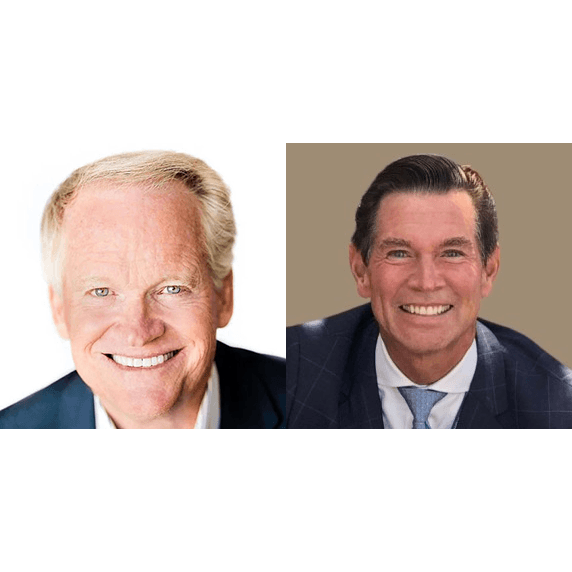
Jim Sorenson is founder and Chairman of the Sorenson Impact Group. He is the author of the soon to be published, IMPACT CAPITALIST: Free Market Principles for a New Generation of Heros.
Terrence Keeley is the CEO of 1PointSix LLC and the Impact Evaluation Lab. He is the author of SUSTAINABLE: Moving Beyond ESG to Impact Investing.
—————————————
1 - This paper - prepared for the exclusive use of the Faith in the Common Good investment forum being held at the College des Bernardins in Paris on April 16-17 - is not to be quoted under any circumstances prior to the event, nor after the event without the written permission of its authors and conference organizers.
2 - A Program-Related Investment (PRI) is an investment made by a charitable organization—typically a private foundation—primarily to advance its exempt purposes rather than to generate financial return. While a PRI may produce income or capital appreciation, any financial return is secondary to achieving a specific social, charitable, or public benefit aligned with the organization’s mission.